Search Site


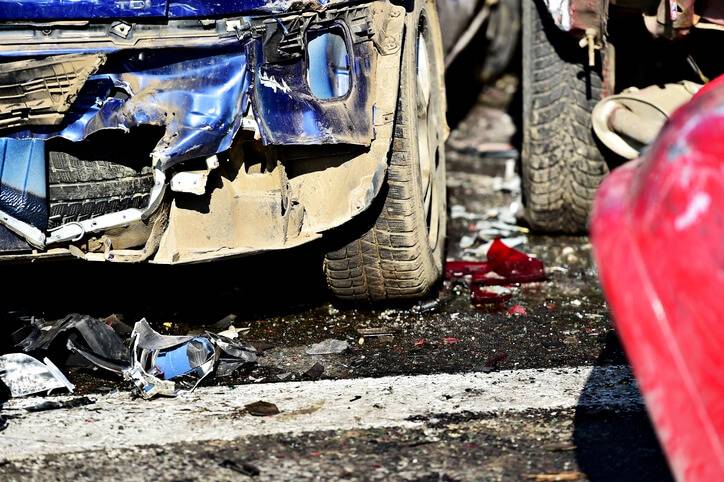
Override and underride accidents are two of the most dangerous types of collisions that can occur between tractor-trailers and smaller vehicles. In both cases, the height difference and sheer size of the truck play a major role in the severity of these accidents.
An override accident happens when a tractor-trailer collides with a smaller vehicle from behind and runs over it. These accidents often occur when a smaller vehicle suddenly slows down or stops and the truck behind doesn’t have enough time or distance to come to a full stop. Due to the significant stopping distance required for a fully-loaded truck, especially at highway speeds, the truck may end up driving over the back end of the smaller vehicle. The impact of an override accident can be catastrophic, as the truck’s weight can crush the smaller vehicle, leading to severe injuries or fatalities.
Override accidents are common in scenarios where visibility is reduced, such as in foggy conditions or during nighttime, or in cases of driver distraction. Additionally, situations like sudden traffic slowdowns, or when smaller vehicles cut in front of large trucks without allowing adequate space, increase the risk of an override accident.
An underride accident occurs when a smaller vehicle crashes into the side or rear of a tractor-trailer and ends up underneath it. These types of accidents can happen when a truck suddenly stops, changes lanes, or blocks the road. Because the trailer’s undercarriage is higher than a typical car’s front end, the smaller vehicle may slide under the trailer upon impact. This can crush the passenger compartment, posing a serious threat to anyone inside.
Underride accidents can also happen when truck drivers fail to use proper lighting or reflective markings, making it hard for other drivers to spot the trailer at night. Poor weather conditions and inadequate signage also contribute to the likelihood of such accidents.
Drivers of smaller vehicles can take several precautions to avoid override and underride accidents:
- Maintain safe distance — Smaller vehicles should avoid tailgating and should stay out of a truck’s blind spots. This helps prevent sudden stops that could lead to an override or underride situation.
- Avoid sudden lane changes — Cutting closely in front of a truck can increase the risk of a rear-end collision, as trucks need more time to stop than smaller vehicles.
- Stay visible — Avoid lingering in areas where a truck driver may not be able to see you, particularly along the sides and close to the back.
- Observe road conditions — Extra caution is necessary in low-visibility conditions or around high-traffic areas where sudden stops may be common.
Determining liability in an override or underride accidents requires an analysis of the specific circumstances of the crash. If the truck driver was at fault due to factors like speeding, distracted driving, or failing to use reflective signals, the trucking company or driver may be liable. In some cases, the manufacturer of the truck or trailer could also bear responsibility if equipment like underride guards failed. However, if the driver of the smaller vehicle contributed to the accident by cutting off the truck or driving unsafely, Massachusetts law requires that liability be apportioned by percentage of fault. An experienced truck accident attorney can make the strongest case possible for placing liability with truck drivers, their employers and truck owners.
At Feinberg & Alban, P.C., we aggressively pursue claims in behalf of victims of commercial truck accidents throughout Massachusetts. We have offices in downtown Boston, Brookline and Worcester. Call us today at 617-232-5950 or contact us online to schedule a free consultation.
Feinberg & Alban, P.C. fervently protects your rights

Client Reviews
-
 5.0/5.0
Colleen Santora is the kind of attorney you want in your corner. She is incredibly attentive, sharp, and thorough, but what really sets her apart is that she gets things done. When you have Colleen representing you, you know your case is not going t...
-
5.0/5.0
Colleen was amazing. I appreciated her professional expertise and her dedication to helping me get a fair settlement. I am so glad she was my attorney and I highly recommend her.
-
5.0/5.0
My lawyer at this firm was Colleen, she is amazing! Everything was explained to me from the beginning, timeframe was awesome. She is a very knowledgeable lawyer. I would recommend this Law Firm.
-
5.0/5.0
I just wanted to drop a quick note to say thank you to Santora Colleen for securing such a great outcome on my wife case. We really appreciate all your hard work, the way you handled the negotiations, and how you kept us informed every step of the wa...
-
5.0/5.0
Colleen has been incredibly thoughtful, supportive, and professional throughout every step of our case. She guided us carefully through the process, always taking the time to answer our questions and ensure we understood our options. She consistently...

Choose a location to review
Feinberg & Alban PC Law office locations:
Awards & Affiliations












Contact us